Online
Today

CDR Australia Engineer

Electrical Engineers ANZSCO 233311 | CDR Engineers Australia

Electrical engineers are one of Australia’s most in-demand skilled professionals, contributing to energy transformation, building new infrastructure, and modernizing its industries. Under ANZSCO 233311, these professionals design, develop, and supervise the manufacture, installation, operation, and maintenance of equipment used in the generation, distribution, utilization, and control of electric power. They are experts in electricity, electronics, and electromagnetism in different fields such as power generation, renewable energy, mining, construction, and telecommunications.

For skilled migration purposes, the official Skills Assessment Authority is Engineers Australia (EA). If the applicant’s qualifications are not from a Washington Accord-accredited institution, then they must submit a Competency Demonstration Report (CDR) to prove that they meet Australian standards.

ANZSCO 233311 is listed on Australia’s Medium and Long-Term Strategic Skills List (MLTSSL), making it eligible for the widest range of Australian permanent residency visa pathways.

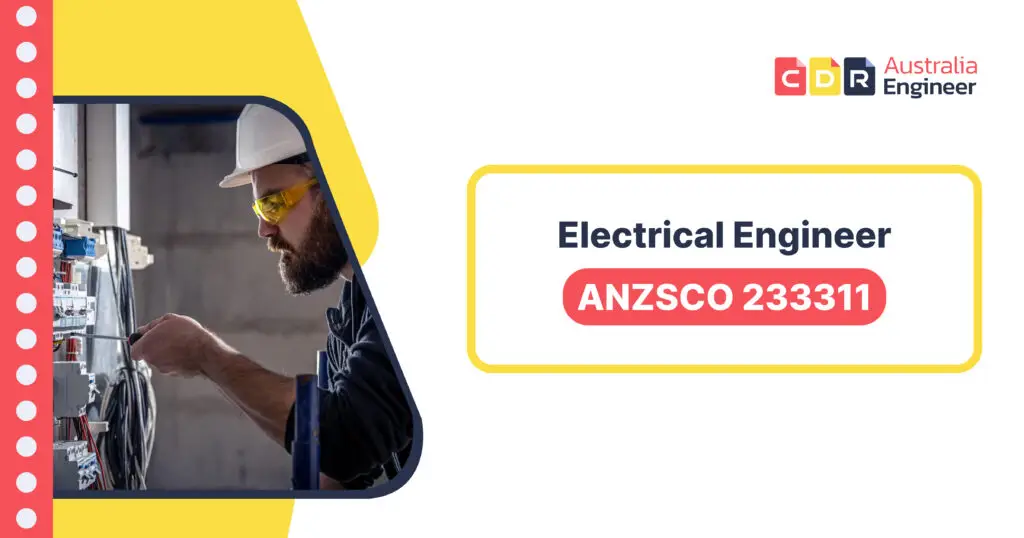
Electrical Engineers working on his power system

Skills Required for Electrical Engineers

To pass a successful Engineers Australia assessment, candidates must demonstrate strong technical competency in emerging electrical engineering disciplines.

Core Technical Skills

  • Design and analysis of power generation, transmission, and distribution systems
  • Circuit design, transformer sizing, switchgear specification, and protection systems
  • Reading and understanding electrical drawings, standards, and specifications
  • Compliance with Australian Standards (AS/NZS) and electrical safety regulations
  • Cable sizing, load flow analysis, and earthing system design

Modern Industry Skills

  • Renewable energy system design — solar PV, wind, battery storage, and microgrids
  • SCADA systems and smart grid technology
  • Programmable Logic Controllers (PLCs) and industrial automation
  • High Voltage (HV) and Extra High Voltage (EHV) system engineering
  • Electric vehicle (EV) infrastructure design

Professional Skills

  • Project management and multi-disciplinary team coordination
  • Technical report writing and compliance documentation
  • Compliance to Workplace Health and Safety (WHS) standards

Electrical Engineers Demand and Market Trends in Australia

The demand for engineering professionals specializing in electrical disciplines Anzsco 233311 is high and growing rapidly across Australia, driven by the nation’s rapid shift to renewable energy, major infrastructure investment, and ongoing skills shortages in the engineering sector.

Key Demand Drivers

  • Australia’s energy sector is facing its largest transformation in recent years; expanding solar farms, wind energy, battery storage, and smart system upgrades create steady, long-term demand
  • Major national infrastructure projects across road, rail, and public transport require specialist electrical engineering capabilities.
  • The mining and resources sector in Western Australia and Queensland has an ongoing shortage of qualified engineers
  • Smart city initiatives across Sydney, Melbourne, and Brisbane require advanced control and automation systems proficiency.
  • Australia’s aging engineering workforce is creating huge gaps that skilled migrants can fill

Key Industries

Professional and Technical Services, Electricity and Gas, Construction, Manufacturing, Mining, Defense, and Telecommunications.

Career Path of Electrical Engineers in Australia

Level

Role

Typical Salary (AUD)

Entry

Graduate Electrical Engineer

$65,000 – $85,000

Mid-Level

Electrical Engineer

$85,000 – $115,000

Senior

Senior Electrical Engineer

$115,000 – $150,000

Principal

Principal / Engineering Manager

$150,000 – $180,000+

Skill Level

Skill Level: Level 1

It requires a Bachelor’s degree or higher, or a minimum of five years of relevant experience with vendor certification.

Skills Assessment Authority:

  • Engineers Australia (EA) for Australian skilled migration
  • Engineering New Zealand for New Zealand Skilled Migrant category

Specializations

  • Electrical Design Engineer
  • Power Systems Engineer
  • Railway Signalling Engineer
  • Renewable Energy Engineer
  • Control Systems and Industrial Automation Engineer
  • Building Services Electrical Engineer

Occupation Lists Overview

ANZSCO 233311 is listed on the MLTSSL, making it qualified for the widest range of visa pathways available under Australia’s General Skilled Migration program.

On the Occupation Lists

  • Subclass 189 – Skilled Independent Visa
  • Subclass 190 – State/Territory Nominated Visa
  • Subclass 491 – Skilled Work Regional (Provisional) Visa
  • Subclass 186 – Employer Nomination Scheme (ENS)
  • Subclass 494 – Skilled Employer Sponsored Regional (Provisional) Visa
  • Subclass 482 – Temporary Skill Shortage (TSS) Visa – Medium Term List
  • Subclass 407 – Training Visa
  • Subclass 485 – Temporary Graduate Visa

Not on the Occupation Lists

  • Subclass 482 TSS Visa – Short Term List

Occupations under Unit Group 2333

Job Outlook for Electrical Engineers 233311

Weekly Earnings (Median)

AUD $2,160 per week

Annual Salary Range

AUD $95,000 – $150,000+

Full-time Employment Share

91%

Average Full-time Hours

44 hours per week

Average Income – Male

AUD $123,233 per year

Average Income – Female

AUD $104,929 per year

Skill Level Rating

Very High (Level 1)

Occupation List

MLTSSL

5-Year Growth Outlook

Strong

Have Any Question?

CDRaustraliaengineer specialises in high-quality CDR, RPL and VETASSESS reports for engineers. CDRaustraliaengineer offer low-cost, customized and reliable services in diverse engineering disciplines.

Meet our Expert

Lily Bhatt

"Skill Assessment Expert"

Visa Options for Electrical Engineer

Electrical Engineers can apply for Australian permanent residency and temporary work visas through multiple pathways, depending on their qualifications, experience, and points score.

Skilled Migration Visas

  • Subclass 189 – Skilled Independent Visa
  • Subclass 190 – Skilled Nominated Visa
  • Subclass 491 – Skilled Work Regional Visa

Employer Sponsored Visas

  • Subclass 186 – Employer Nomination Scheme
  • Subclass 482 – Temporary Skill Shortage Visa
  • Subclass 494 – Skilled Employer Sponsored Regional Visa

Other Pathways

  • Subclass 485 – Temporary Graduate Visa
  • Subclass 407 – Training Visa

English Language Requirement

Test

Overall

Minimum Component Scores

IELTS

7.0

Minimum 6.0 per band; 7.0 in Speaking

OET

B

Minimum B in all sections

TOEFL iBT

93

L:12, R:13, W:21, S:23

PTE Academic

65

Minimum 50 (L, R, W); 65 in Speaking

Exceptions

  • Australian graduate waivers apply in some states and territories
  • Priority Skilled Lists may impose specific requirements by state
  • Applicants from the UK, Canada, New Zealand, the US, and Ireland may be excluded from English testing in certain pathways
  • Where mandatory registration or licensing is required, a higher English proficiency level may apply

Qualification Requirements

To obtain a positive Engineers Australia assessment, applicants typically need:

  • A Bachelor’s degree or higher in Electrical Engineering, Electronics Engineering, or a closely related discipline
  • OR at least five years of relevant engineering experience with vendor certification as a replacement
  • Minimum two years of relevant work experience in roles matching ANZSCO 233311 duties
  • For non-Washington Accord institutions — a complete, compliant CDR report
  • Professional registration may be required in some states (e.g., RPEQ in Queensland)

Tasks Performed

  • Power station, substation, and generation system design
  • Circuit, transformer, and transmission line configuration
  • Electrical product development (motors, switchgear, control systems)
  • Technical drawings, standards, and regulation interpretation
  • Resource planning for installation and commissioning
  • Operation and maintenance of power and industrial systems
  • Traffic control and signalling system design
  • Renewable energy integration (solar, wind, battery storage)
  • Research in power systems, smart grids, and control technologies

Looking for expert CDR Writer for Engineers Australia?

Creating a CDR Report may be difficult due to Engineers Australia’s standards and rules ( EA ). Our experienced engineers have assisted many people in obtaining approval for their report from the EA via the use of powerful projects.

Final Thoughts

ANZSCO 233311 offers one of the most well-supported migration pathways available for engineering professionals in Australia. Because of its MLTSSL status, high salaries, high rates of full-time employment, and steady demand in the energy and infrastructure sectors, this is a very competitive job for skilled migrants.

A successful Engineers Australia assessment, however, depends entirely on the quality of your CDR. Poorly written, generic, or plagiarized reports are rejected, and a failed assessment can set back your migration timeline significantly. Getting the CDR right the first time matters.

Remember Us

If you need expert support with your CDR or Engineers Australia assessment, our team at CDRAustraliaEngineer is here to help. We provide end-to-end CDR writing services customized to your individual engineering experience and career history.

We assist with:

Basic CDR Pricing Plan

NORMAL PLAN

25 WORKING DAYS

AUD $800

 ✅ 3 Career Episode
 ✅ 1 CPD
 ✅ 1 Summary Statement
 ✅ Plagiarism free Report
 ✅ Multiple Correction
 ❎ 3 Reports
 ❎ Professional Resume
 ❎ Portal Upload
 ❎ Handle of EA Comment
 ❎ After Sale Service
 ❎ New Career Episode
 ❎ Reference Letters
 ❎ Explanation Letter
 ❎ Rewrite Service

 ROYAL PLAN

17 WORKING DAYS

AUD $2500

 ✅ 3 Career Episode
 ✅ 1 CPD
 ✅ 1 Summary Statement
 ✅ Plagiarism free Report
 ✅ Multiple Correction
 ✅ 3 Reports
 ✅ Professional Resume
 ✅ Portal Upload
 ✅ Handle of EA Comment
 ✅ After Sale Service
 ✅ New Career Episode
 ✅ Reference Letters
 ✅ Explanation Letter
 ✅ Rewrite Service

FAQs

1. What is ANZSCO 233311?

ANZSCO 233311 is the Australian and New Zealand Standard Classification of Occupations code for Electrical Engineer. It covers professionals who design, develop, and supervise the manufacture, installation, and maintenance of electrical systems, equipment, and machinery for the generation and distribution of electric power.

2. Is the electrical engineering occupation in demand in Australia?

Yes. The occupation is listed on the MLTSSL and is classified as experiencing a shortage at both national and state levels. Key demand drivers include Australia’s renewable energy transition, infrastructure investment, and a persistent shortage of qualified engineering professionals across all sectors.

3. What is the average salary for this occupation in Australia?

The median weekly earnings are approximately AUD $2,160 per week. Annual salaries range from AUD $65,000 for entry-level graduates to AUD $180,000+ for principal engineers, with the mid-career average sitting around AUD $95,000–$115,000 depending on industry and location.

4. Do I need a CDR to migrate to Australia as an engineer in this occupation?

A CDR is required if your engineering degree is from a university that is not accredited under the Washington Accord. If your institution is Washington Accord-accredited, Engineers Australia automatically recognizes your qualification, and no CDR is needed.

5. Can I get Australian PR through ANZSCO 233311?

Yes. This occupation is eligible for permanent residency through Subclass 189, 190, and 491 skilled migration visas, as well as employer-sponsored pathways including Subclass 186 and 482. A positive Engineers Australia skills assessment is required before lodging most visa applications.

6. How long does an Engineers Australia CDR assessment take?

Standard processing typically takes several weeks from the date of a complete submission. Engaging a professional CDR writing service reduces the risk of delays caused by incomplete or non-compliant documentation.