
Online

The AACA Portfolio Assessment is an important component of the Overseas Qualifications Assessment (OQA) for architects with overseas qualifications who are seeking registration or migration opportunities in Australia. It allows applicants to demonstrate their architectural knowledge, skills, and professional competencies through selected architectural projects and supporting documentation.
The Architects Accreditation Council of Australia (AACA) uses the OQA to assess whether an overseas architectural qualification is comparable to a current Australian-accredited qualification. As part of the competency assessment process, applicants must present evidence that demonstrates the relevant requirements of the 2021 National Standard of Competency for Architects (NSCA).
Rather than simply showcasing your best architectural work, the portfolio should clearly demonstrate your individual contribution, architectural knowledge, design and technical capabilities, and how your project experience relates to the applicable competency requirements.

Portfolio assessment is the presentation of selected architectural projects as evidence of your knowledge, skills, and professional abilities. Within the AACA Overseas Qualifications Assessment (OQA) pathway, applicants must submit a portfolio of 3 to 4 architectural projects. Together, these projects should show assessors that your education and experience match what is expected of an architect working in Australia.
The portfolio should not be just a collection of appealing architectural sketches. Every project should provide clear evidence of your architectural skills and support the relevant criteria of the 2021 National Standard of Competency for Architects (NSCA). A project that looks impressive but does not show your decision-making, technical understanding, or professional responsibility will add little value to your assessment.
AACA also asks applicants to provide written summary statements for the applicable competency areas. These statements should explain what you did, how you approached design and technical challenges, and which architectural knowledge you applied. Each claim should be backed by drawings, sketches, or other documentation from the project, so the assessor can easily see where the evidence is located.
The assessor should also be able to see which parts of each project were your own work. Be specific about your role and responsibilities, and avoid presenting team achievements as if they were yours alone. Because the portfolio feeds into the competency assessment interview, you should only include projects you know in depth and can discuss with confidence.
Portfolio assessment is particularly relevant to applicants undertaking the AACA Overseas Qualifications Assessment (OQA) with an overseas architectural qualification. If you trained outside Australia, it is the main way to show assessors how your skills and experience compare with Australian expectations.
AACA states that the OQA determines whether an overseas academic qualification is comparable to a current Australian accredited architecture qualification. Applicants must also demonstrate the relevant competencies under the 2021 NSCA, which is why the portfolio and written statements carry so much weight.
The OQA may be relevant if you:
If any of these apply to you, preparing a well-organized portfolio early can save time later in the process. Eligibility and assessment requirements can change, so always check the latest AACA guidance before preparing your application.
Our expert consultants will assess your profile and recommend the best pathway for your Australian migration goals.

AACA requires an OQA portfolio to contain 3 to 4 architectural projects. The selected projects should collectively provide sufficient evidence of your architectural knowledge and competency.
Your portfolio may include:
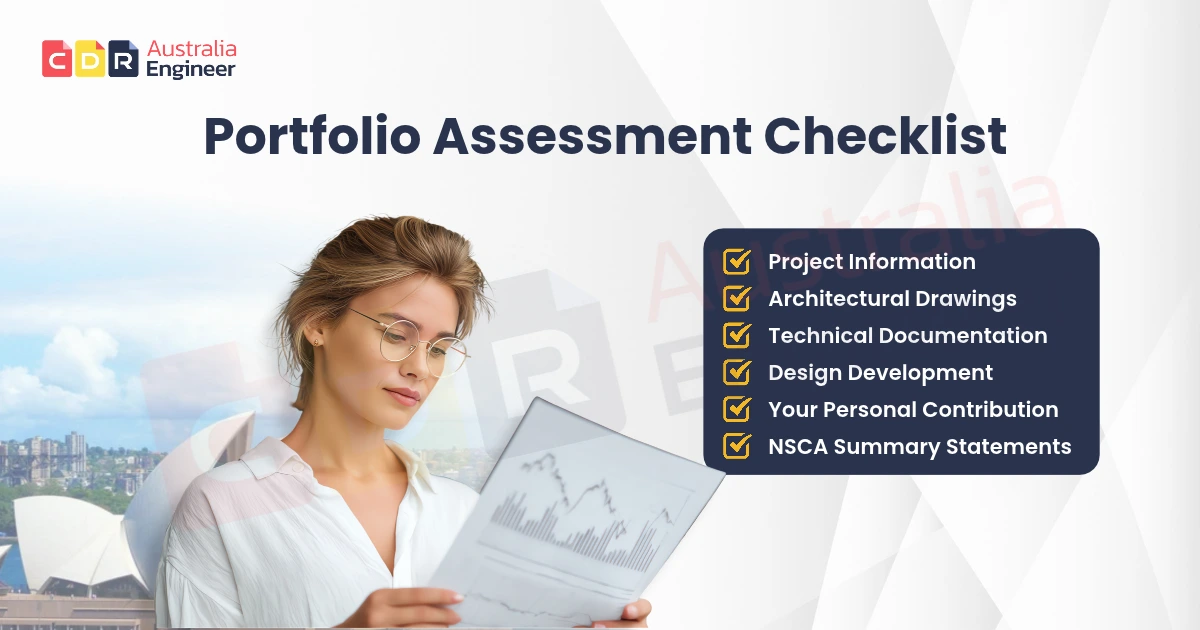
Introduce each project clearly, including relevant information about the project, your role, and the context in which the work was undertaken.
Include relevant drawings that demonstrate your involvement in the architectural design and documentation process.
Where relevant, provide documentation that demonstrates your understanding of technical, construction, environmental, structural, and building considerations.
Show how the design developed from the initial concept through to the relevant stages of resolution.
Clearly identify your own contribution to each project. Avoid presenting team achievements as though they were solely your work.
Your written summary statements should address the relevant competency areas of the 2021 National Standard of Competency for Architects and connect your claims to evidence in the projects presented.
Applicants should include 3 – 4 architectural projects in their AACA OQA Portfolio Assessment. AACA states that it will take up a maximum of four projects.
AACA suggests that a student or academic project like a final design project be included, as it can serve as a foundation for conversation at the competency assessment interview. Postgraduate professional projects can also be used, though.
Choosing projects is one of the most important parts of preparing this assessment.
Instead of selecting projects only because they look visually impressive, choose projects that allow you to demonstrate a broad range of architectural knowledge and competencies.
Consider projects that demonstrate:
AACA identifies six prescribed subject core areas relevant to its qualification assessment, including design studies and integration, documentation and technical studies, history and theory, practice and project management, environmental studies, and communication studies.
The National Standard of Competency for Architects (NSCA) is central to AACA’s competency assessment process.
Your portfolio and written statements should demonstrate how your education and experience relate to the relevant NSCA performance criteria. The evidence should be specific and connected to your actual projects rather than relying on generic descriptions of architectural practice.
A strong assessment makes it easy for an assessor to understand:
Applicants can weaken their portfolio by making avoidable mistakes, such as
Your portfolio should be evidence-based, organized, and specific to your own architectural experience.
The portfolio assessment is closely related to the competency assessment interview under the AACA OQA process.
According to AACA, the competency assessment consists of a portfolio of 3-4 architectural projects, written summary statements in response to the competency assessment questions for the 2021 NSCA, and a competency assessment interview.
You will need to be ready to talk about the projects you are submitting and to explain your architectural knowledge, decisions, responsibilities, and evidence of competency.
Your portfolio should then consist of only true projects and work that you have deep knowledge of.
Once AACA has seen all of the documents submitted, it may give feedback and request additional information/revisions prior to the competency assessment interview.
If an applicant receives a Suitable Outcome, they may receive an outcome letter describing their outcome that can contribute towards progression to the Architectural Practice Examination (APE), where applicable. A skilled migration assessment can also be carried out upon request for those seeking to immigrate.
The purpose of having a strong portfolio is to convey more than just your best architectural work. It should include unambiguous evidence of knowledge, skills, experience, and competency to the relevant AACA requirements.
If you are creating an AACA Portfolio Assessment, CDRAustraliaEngineer can assist you to organize your projects, enhance the presentation of your evidence, and confidently prepare your portfolio.
An AACA Portfolio Assessment forms part of the Overseas Qualifications Assessment for applicants with overseas architectural qualifications. Applicants submit selected architectural projects and supporting competency evidence to demonstrate the relevant NSCA requirements.
AACA requires a portfolio of 3 to 4 architectural projects for the OQA competency assessment. AACA states that more than four projects cannot be accepted.
Yes. AACA recommends including a student or academic project, such as a final architectural design project, as it can provide a useful basis for discussion during the Competency Assessment Interview.
Yes. Professional architectural projects can be included, provided they appropriately demonstrate your competencies and comply with the applicable AACA requirements.
Not exactly. The Overseas Qualifications Assessment (OQA) is the broader AACA assessment program. The portfolio and competency assessment form an important part of the OQA process.
Start with a free consultation. We assess your profile at no cost and guide you every step of the way.

Scan to Connect With Our Experts ⤴︎

