
Online

If you are an overseas-trained architect, the NSCA Summary Statement is probably the single document standing between you and a positive AACA outcome. Not the Portfolio. Not the interview. The Summary Statement is what tells an assessor where to look, and if it is built wrong, even a genuinely strong Portfolio can read as incomplete.
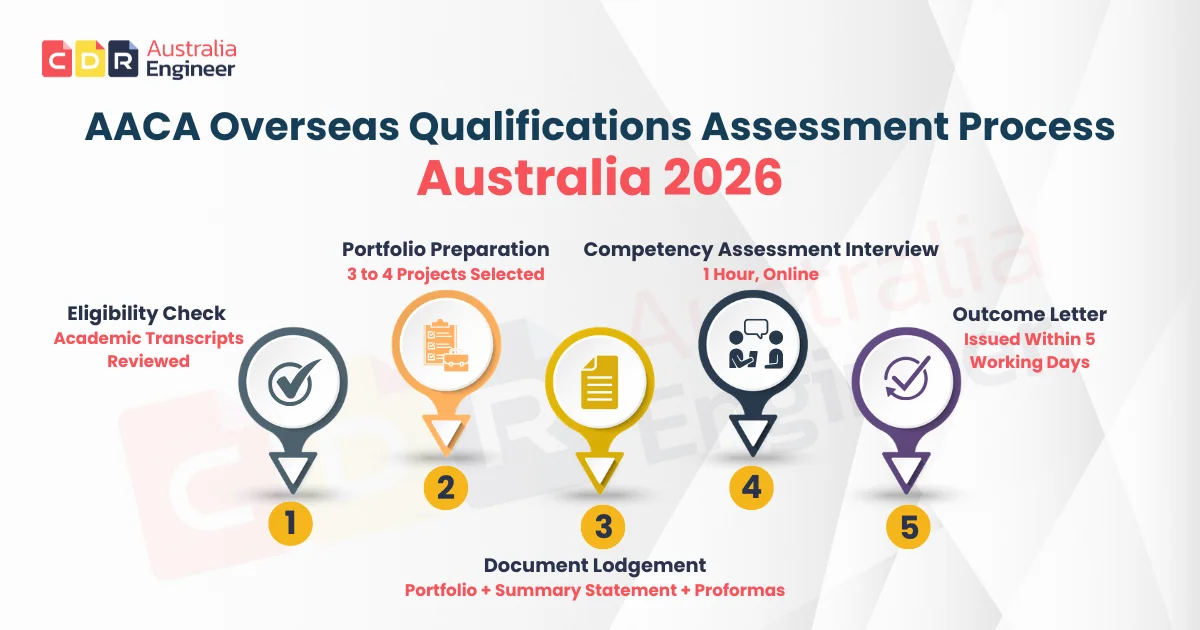
Since March 2022, most first-time applicants complete the Overseas Qualifications Assessment as one combined process rather than two separate stages, though anyone who already holds an older Stage 1 outcome can still apply for Stage 2 on its own under the earlier structure. Once your Portfolio, Project Proformas and NSCA Summary Statement are lodged as a complete package, AACA reviews the file and generally sends a single round of feedback if anything is missing before scheduling your Competency Assessment Interview, which runs for approximately one hour online with two external assessors and is usually booked with at least two weeks’ notice. An outcome letter typically follows within about five working days of that interview, and a positive result confirms your qualification is equivalent to a graduate-level Australian architecture degree, opening the door to the Architectural Practice Examination and, separately, to the skilled migration visa pathways that require this assessment.
The NSCA Summary Statement is a mandatory document submitted as part of the AACA Overseas Qualifications Assessment (OQA). It maps the Performance Criteria set out in the National Standard of Competency for Architects to specific evidence inside your Portfolio, project by project, criterion by criterion.
It helps to think of it less like a personal statement and more like an index. Nobody reads an index cover to cover. It exists so a reader can jump straight from a question to the answer, and that is precisely the job your NSCA Summary Statement does for an AACA assessor. They open it first, then flip to the exact Portfolio page it points them to.
This is also why a generic, resume-style NSCA Summary Statement almost always struggles. Restating your job title and years of experience tells an assessor nothing about which Performance Criterion a given project actually proves.
Since March 2022, most first-time applicants complete the Overseas Qualifications Assessment as a single combined process rather than two separate stages, though applicants who already hold an older Stage 1 outcome can still apply for Stage 2 on its own.
Step | What Happens | Where the Summary Statement Fits |
Eligibility check | AACA reviews your academic transcripts against Australian equivalency | Not required yet |
Portfolio preparation | You select 3 to 4 architectural projects showing a range of scale and stage | Built alongside the Portfolio, not after it |
Document lodgement | Portfolio, Project Proformas and NSCA Summary Statement submitted together | Required at this point |
Competency Assessment Interview | One hour, online, with two AACA assessors | Assessors question you directly on claims made here |
Outcome letter | Issued after the interview, typically within about 5 working days | Determines Suitable or Not Suitable result |
Applicants often prepare the NSCA Summary Statement after finishing the Portfolio. That order tends to create mismatches. It works better the other way around: select and organise your projects first, then build the Summary Statement against the evidence you actually have, not the evidence you wish you had.
A typical mid-career engineer with 70 base points receives 85 points after a state nomination, placing them firmly within invitation range for most states. Submit your EOI the moment you become eligible, your EOI submission date is the tiebreaker when two candidates share the same points score.
The National Standard of Competency for Architects groups its required Performance Criteria into thirteen Topic Areas, drawn from four Units of Competency: Practice Management and Professional Conduct, Project Initiation and Conceptual Design, Detailed Design and Construction Documentation, and Design Delivery and Construction Phase Services.
Your NSCA Summary Statement needs to work through every Topic Area that applies to your Portfolio, using AACA’s own official wording rather than paraphrased headings. Broadly, the thirteen areas cover:
Not every project in your Portfolio needs to touch every Topic Area on its own. What matters is that, across your full set of 3 to 4 projects, all thirteen are genuinely addressed somewhere, with a real project reference behind each one.
This is the part most applicants miss entirely. The NSCA does not test everyone against the same bar. It defines three Competency Profiles: Graduate of Architecture, Candidate for Registration, and Architect Post-Registration. The Overseas Qualifications Assessment benchmarks you against the first one, Graduate of Architecture, not against a fully registered practitioner.
The Performance Criteria themselves signal which depth of response is expected, through their wording:
Level | Typical Wording | What It Asks For |
Awareness | “be aware of”, “have knowledge of” | Show familiarity with a concept or requirement |
Understanding | “understand”, “demonstrate understanding” | Explain how the concept applies in real practice |
Application | “be able to apply”, “be able to prepare” | Demonstrate practical, hands-on use through evidence |
Most criteria at Graduate of Architecture level sit at Awareness or Understanding rather than full independent Application. Claiming Application-level mastery for every single criterion in your NSCA Summary Statement is a common overreach, and assessors notice it quickly.
CDR australiaengineer specialises in high-quality CDR, RPL and VETASSESS reports for engineers. We offer low-cost, customized and reliable services in diverse engineering disciplines.
AACA provides an official template for this document, and applicants are expected to use it rather than design their own layout. Straying from the template does not show initiative; it just creates extra work for the assessor reviewing your file.
None of these steps are optional extras. A Summary Statement that ignores the template structure, even with strong underlying project work, reads as disorganised before an assessor gets to the substance.
These two documents get confused constantly, and mixing them up wastes real preparation time.
Title | NSCA Summary Statement | Project Proforma |
Covers | All submitted projects together | One individual project per document |
Purpose | Maps each Performance Criterion to where it was proven | Describes the project’s scope, your role and delivery |
Answers | Which competency this evidence proves | What actually happened on this project |
Building both documents at the same time, using the same project names and page references throughout, is what keeps a Stage 2 submission internally consistent. Assessors flag mismatches between the two faster than almost anything else in the file.
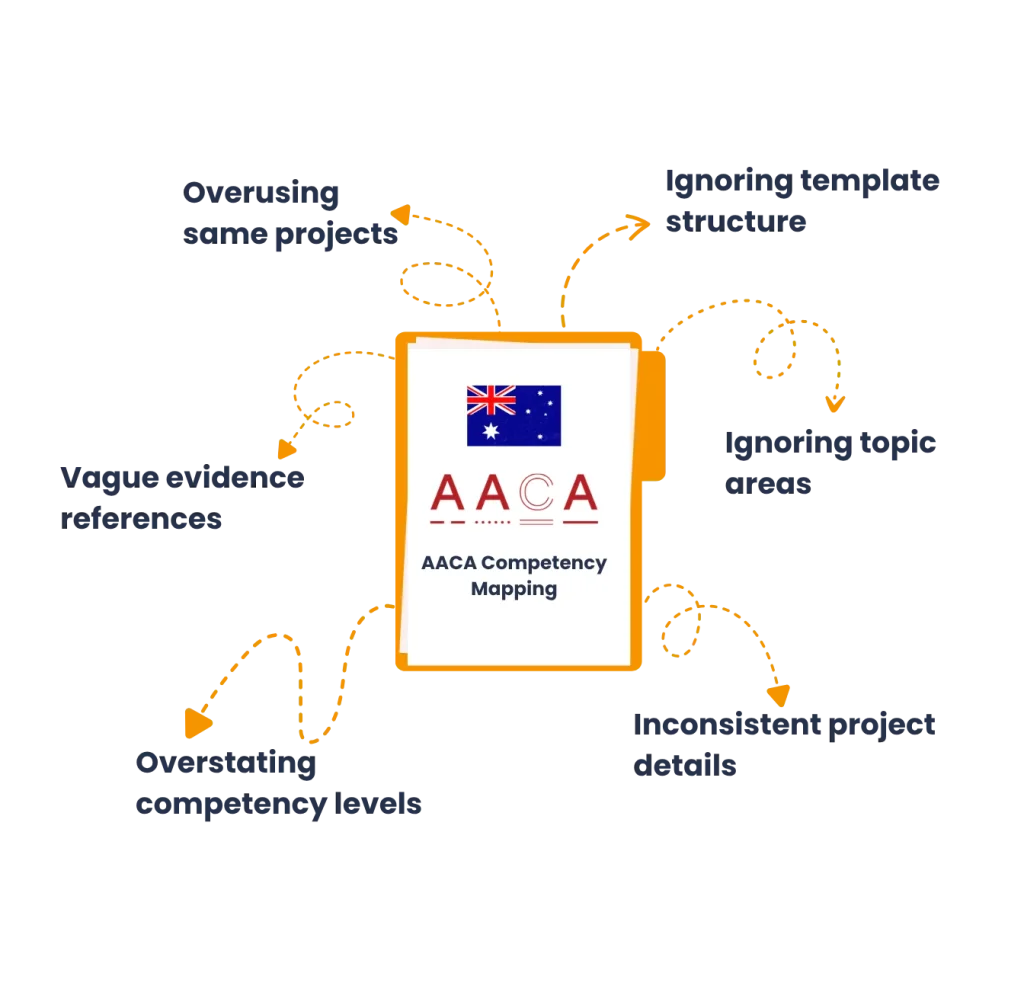
A handful of avoidable issues account for most requests for additional information from AACA.
Each of these is straightforward to fix before lodgement. None of them are worth discovering for the first time in a Not Suitable outcome letter.
Once the Portfolio, Project Proformas and NSCA Summary Statement are lodged, AACA reviews the file for completeness and typically sends one round of feedback if anything is missing, before scheduling the Competency Assessment Interview. That interview runs for about an hour online, and assessors commonly question applicants directly on claims made in the Summary Statement, so you should be ready to explain any project or criterion you have listed.
If the outcome comes back Not Suitable, AACA provides written reasons, and applicants can submit further evidence, request a second interview, or lodge an appeal. A well-referenced, honestly mapped NSCA Summary Statement is what keeps most applicants from ever reaching that stage.
A positive AACA Stage 2 outcome is the mandatory skills assessment result the Department of Home Affairs requires before any skilled migration visa application for Architect, ANZSCO 232111, can proceed.
Visa | Type | Key Requirement |
Subclass 189 | Permanent, Skilled Independent | MLTSSL occupation, points-tested invitation, no sponsor needed |
Subclass 190 | Permanent, State Nominated | State nomination plus positive AACA outcome |
Subclass 491 | Provisional, Skilled Regional | Regional nomination plus positive AACA outcome |
Permanent, Employer Nomination | Employer nomination plus positive AACA outcome | |
Subclass 482 | Temporary, Skills in Demand | CSOL occupation, employer sponsorship required |
Architect sits on the Medium and Long-term Strategic Skills List, which is why the 189 independent pathway stays open to applicants who reach a competitive points score without needing an employer or state nomination.
Our expert consultants will assess your profile and recommend the best pathway for your Australian migration goals.
An unsuccessful Stage 2 outcome does not just mean more paperwork. It means re-selecting Portfolio projects, rebuilding the Summary Statement, and going through the Competency Assessment Interview process again, months after your first attempt. For architects who have already spent years qualifying overseas, that delay carries a real cost.
CDR Australia Engineer AACA Skills Assessment service works directly with architects preparing their Portfolio and NSCA Summary Statement against the current 2021 standard, mapping each of the thirteen Topic Areas to genuine project evidence before the file ever reaches an AACA assessor.
It is the required mapping document for AACA’s Overseas Qualifications Assessment, linking each relevant Performance Criterion in the National Standard of Competency for Architects to a specific project in your Portfolio.
Thirteen Topic Areas, grouped under four Units of Competency, covering practice management, design, documentation and construction phase services.
No. A resume lists your work history. An NSCA Summary Statement proves specific competencies using specific project evidence, referenced page by page.
The Graduate of Architecture profile, one of three Competency Profiles in the NSCA. Most criteria at this level call for Awareness or Understanding, not full independent Application.
No. AACA expects the official Summary Statement template to be used exactly, without a self-built format.
Free consultation & document collection.
ANZSCO code & category assessment.
Expert CDR writing by engineers.
Quality check & plagiarism test.
Delivery + free revisions support.
Start with a free consultation. We assess your profile at no cost and guide you every step of the way.

Scan to Connect With Our Experts ⤴︎