
Online

The temporary graduate pathway is an option for international students who have studied in Australia and want to stay and work or find professional experience to gain further experience in Australia. This pathway can be useful for engineering and information technology (IT) graduates to use to gain experience, consider employment opportunities, and plan for their future migration.
In civil engineering, mechanical engineering, electrical engineering, software development, cybersecurity, telecommunications, and other technical disciplines, graduates come to Australia. However, getting a graduate visa does not automatically mean you will be able to get permanent residency, get a job, or gain a positive skill assessment. Applicants are advised to know what requirements and conditions are needed for their visa application and how to assess it next.
At CDR Australia Engineer, we assist clients with advising on engineering skills assessment documentation and Competency Demonstration Reports (CDRs). Students seeking to enter careers that involve ICT may also need to be aware of the process of skills assessment by the Australian Computer Society (ACS). This article will cover the temporary graduate visa options, eligibility requirements, how to apply, and assessment pathways for engineering and IT professionals in 2026.

A temporary graduate visa (subclass 485) is a temporary visa for eligible international graduates who are skilled and have an Australian qualification. Visas allow visa holders to reside, work, and study in Australia for the duration of their visas, depending on the relevant stream.
The temporary graduate visa provides graduates with opportunities to get practical experience, develop their professional network, and investigate career prospects related to their qualifications.
Engineering graduates can take advantage of this time to undertake postgraduate engineering roles, upskill, and explore the Engineers Australia assessment pathways. IT graduates might consider IT-related careers, such as software developer, systems analyst, cybersecurity professional, and other ICT-related careers, or consider whether an ACS skills assessment is relevant for their future migration.
This is a temporary visa and does not automatically result in permanent residency. Applicants will need to meet the visa eligibility criteria for subsequent visas, if they wish to apply for them, on their own.
This stream is for eligible graduates who have an associate degree, diploma, or trade that is relevant to an occupation listed on the relevant skilled occupation list.
It is important that applicants satisfy the relevant Australian study, occupation, and other visa requirements. A skills assessment might also be needed depending on the nominated occupation and rules, if applicable.
The typical duration of stay is up to 18 months with special exceptions for those with a Hong Kong and British Overseas Citizen passport.
This stream is for international graduates holding an eligible Australian degree or higher qualification.
Common durations of stay are
Exceptions and arrangements will apply on an individual basis. It is expected that the applicant should ensure they satisfy any current Department of Home Affairs requirements prior to making an application.
Students who previously had a graduate visa and have completed their studies in an eligible area in the region may be eligible for an extra stay.
The extra amount of time is typically one or two years and varies according to the applicant’s situation and the applicable regional study and residence requirement.
A regional study is not a requirement for eligibility. All conditions for this stream must be met.
The graduate visa can provide eligible graduates with time to explore the Australian employment market and develop professional experience.
This can be done in the field of civil engineering, mechanical engineering, electrical engineering, construction, telecommunications, infrastructure, and other related areas.
The workplace experience will be useful in developing an understanding of Australian workplace standards, project documentation, workplace safety, and professional expectations. For those who wish to apply for skilled migration, it is important to keep up-to-date records of their duties, employment dates, and technical contributions.
Graduates of IT courses can pursue careers in software development, cybersecurity, data analysis, systems administration, systems analysis, and other ICT-related areas.
Relevant work experience can provide graduates with the opportunity to build up technical skills and knowledge of industry expectations. The applicants who are thinking of pursuing further skilled migration should also figure out what the occupation they are intending for is and whether it requires an ACS skills assessment for the pathway they want to go for.
While a graduate visa does not automatically qualify you for a skills assessment or another visa, it is possible to do so.
Engineers Australia rates qualifications and competencies for engineering skills that are relevant to engineering occupations. Depending on the qualifications and background of an applicant, the suitable assessment path could be an accredited qualification pathway or a Competency Demonstration Report (CDR).
A CDR is especially important for those who are eligible to show their engineering knowledge and skills as per the relevant assessment procedure.
A CDR submission may include:
Applicants are required to meet Engineers Australia requirements for the assessment route they are eligible for. A CDR is not required for all engineering graduates, and having an engineering qualification from another country doesn’t automatically mean a CDR is required.
CDR Australia engineers can help applicants comprehend the documentation needs and present their real engineering experience effectively and consistently.
Across many occupations in information and communication technology (ICT), the Australian Computer Society (ACS) is the assessing body. Depending on their nominated occupation and visa requirements, IT graduates may require an ACS skills assessment for some skilled migration pathways.
The relationship between what an applicant has learned and the nominated ICT occupation, as well as qualifications and experience in the workplace, are taken into account for ACS assessment pathways.
Applicants might be required to submit academic records, qualifications certificates, employment references, and other documents as stated by ACS. Specific requirements will vary based on the assessment pathway and the individual applicant’s situation.
An award of an IT qualification or a graduate visa does not guarantee a positive ACS assessment. Applicants are advised to refer to the latest ACS guidelines to identify the pathway suitable to their work experience and qualifications.
It’s also important to make a difference between the two assessing authorities. Engineers Australia evaluates relevant engineering jobs, and ACS evaluates eligible ICT jobs. Applicants should choose the authority based on their nominated occupation and on the requirements of their proposed pathway for migration.
Our expert consultants will assess your profile and recommend the best pathway for your Australian migration goals.

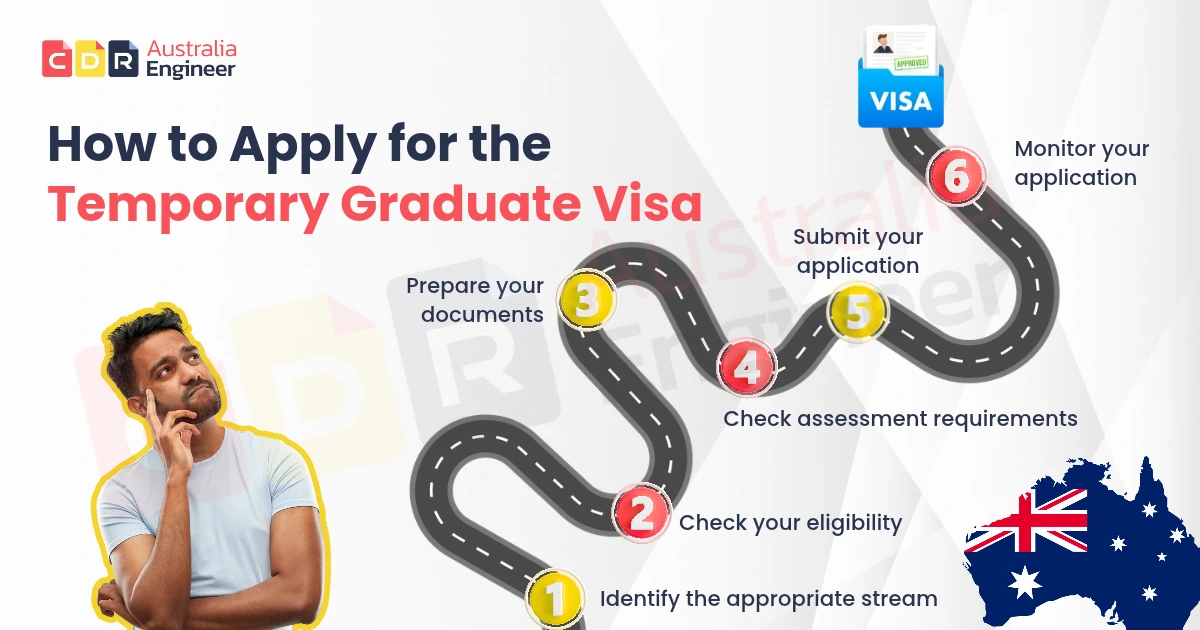
Review your qualification level and course type. Graduates with a diploma or trade qualification may fit the post-vocational education work stream. Graduates with a degree usually look at the post-higher education work stream. Regional study may also open the second stream. Choosing the right temporary graduate visa stream first prevents wasted effort and costly refusals.
Confirm your age, student visa history, and Australian study requirement. Check that your course is CRICOS-registered and that you completed it within the allowed timeframe. Confirm your English-language evidence and your health insurance cover. Check whether an age exception applies to you.
Prepare your documents. Gather your passport, completion letter, academic transcripts, and English test results. Add your health insurance details and any police certificates requested. Make sure names, dates, and course details match across every document. Inconsistent records are a common cause of delays.
Some streams need a suitable skills assessment for your nominated occupation. Engineering applicants may need Engineers Australia, and ICT applicants may need ACS. Confirm the correct authority, processing times, and validity period before you lodge. Start early, because assessments can take longer than the visa application itself.
Lodge through the official Department of Home Affairs online system. Complete every section carefully and upload clear, legible documents. Pay the current visa charge and keep your receipt. Lodge before your current visa expires so your lawful status stays protected.
Check your email and online account regularly for updates. Respond quickly to any request for further information or biometrics. Keep your contact details current and avoid unnecessary changes to your application. Wait for the official outcome before making long-term plans.
Applicants should check the latest eligibility criteria, visa requirements, and application fees before submitting their applications, as Australian immigration policies and charges may change over time.
Applicants can reduce the risk of delays and eligibility problems by avoiding these common mistakes:
Once trained, graduates can look into visas sponsored by an employer, points-tested skilled visas, or other applicable visa categories.
Engineers Australia may inspect the Engineers Australia skills assessment process, and/or IT graduates should complete the ACS assessment requirements for their nominated occupation. The right track is determined by occupation, qualification, work experience, and visa requirements.
Keeping accurate records of employment, building the right skills for the job, and knowing what is required for assessment can support graduates in making informed plans for their future. But having work experience or a positive skills assessment does not necessarily mean that the visa will be granted or permanent residency will be achieved.
Preparing for an engineering skills assessment requires technical evidence, competency requirements, and documentation quality.
CDR Australia Engineers provides assistance to engineers who are looking for advice on CDR preparation and Engineers Australia assessment documents. We educate our clients about the process and requirements, arrange the evidence, and clearly present their true engineering knowledge and experience.
We can support you in recording career episodes, keeping CPD records, or writing summary statements; our services aim to help you record your work experience in a structured manner.
Candidates interested in ICT-related careers are asked to also refer to the assessment requirements of ACS itself. The selection of the right assessing authority is key to designing the right migration pathway.
For eligible international graduates, the Temporary Graduate pathway is a great opportunity to gain work experience and job prospects in Australia. When making plans for your next career step, it is important to have an understanding of visa eligibility, occupation requirements, and skills assessment options.
Engineers Australia assessment pathways, where relevant, might be of interest to engineering graduates. The ACS requirements for occupations nominated as ICT occupations may require IT graduates to investigate.
Graduates can make better choices regarding their future career by verifying necessary requirements, creating proper documents, and having a plan. CDR Australia engineering experts are able to help the engineering applicants understand the requirements for CDR documentation and prepare for the engineering assessment pathways relevant to them.
The Temporary Graduate visa (subclass 485) allows certain international students to live, work, and study in Australia on a temporary basis. Applicants are required to have completed a suitable Australian course of study first.
Your stay depends on your visa stream and qualification. The post-vocational education work stream generally allows up to 18 months. The Post-Higher Education The work stream typically allows two or three years. Exceptions may apply, so check the current Home Affairs rules.
No, the visa itself does not require a CDR. A CDR may be needed for a separate Engineers Australia skills assessment. This depends on your qualification and your intended assessment pathway.
Some do. An ACS skills assessment may be required when you pursue a pathway involving an eligible ICT occupation. The requirement depends on your nominated occupation and intended visa. Check the official ACS criteria before you apply.
ACS assesses eligible ICT occupations, while Engineers Australia assesses engineering occupations. You should choose the authority that matches your nominated occupation and migration pathway.
Start with a free consultation. We assess your profile at no cost and guide you every step of the way.

Scan to Connect With Our Experts ⤴︎

