
Online

One of the first things you have to understand if you’re an engineer applying for skilled migration to Australia is that having worked as an engineer isn’t automatically the same as having assessed engineering employment. Engineers Australia doesn’t take a job title or years on a payslip at face value—through the Relevant Skilled Employment Assessment, it formally reviews and endorses each period of your work history before that experience can count toward your visa points.
This assessment examines your employment against both primary and secondary documentation, checking that your role, dates, duties, and pay genuinely reflect skilled engineering work at market rate. Many overseas-trained engineers have years of solid, relevant experience but still lose points or face delays simply because their evidence wasn’t structured the way Engineers Australia expects. A well-organized approach to this step can make a real difference to your overall points outcome.
At CDR Australia Engineer, we help internationally qualified engineers understand what this assessment actually requires, including those preparing employment evidence for Engineers Australia. We make sense of each document type and guide you through a logical, evidence-based approach.
The Relevant Skilled Employment Assessment is a service offered by Engineers Australia to review and endorse an applicant’s engineering employment, whether as an employee or as someone self-employed. It’s in charge of:
Ultimately, that’s how Engineers Australia safeguards the integrity of the points test and ensures only genuine, at-level engineering experience is credited.
Overall, it serves as the link between an engineer’s work history and the points they can actually claim for it on their Expression of Interest.
The Relevant Skilled Employment Assessment and the Migration Skills Assessment are both run by Engineers Australia, but they serve entirely different purposes, and it’s worth understanding both before you assume one covers the other.
Sometimes, candidates don’t recall the difference between the two, largely because both sit under the same assessing authority and often get submitted around the same time. The Migration Skills Assessment is the core evaluation of whether your qualifications and competencies meet Australian standards for your nominated occupation, while the Relevant Skilled Employment Assessment is a separate service that specifically verifies your employment history for points-test purposes, examining the roles themselves rather than the qualification behind them.
In practical terms:
This is why some applicants assume their employment has already been “counted” simply because their qualification was assessed. It hasn’t—the two are evaluated on entirely different evidence.
It follows its own logical sequence, distinct from the main Migration Skills Assessment application. The typical progression is as follows:
Fees vary depending on whether it’s bundled with a full Migration Skills Assessment or requested as a standalone service and on the number of employment periods being assessed. As a general guide:
The fees are determined by Engineers Australia and reviewed periodically. Before budgeting, always refer back to the official Engineers Australia fee schedule to confirm current pricing.
The assessment doesn’t test technical knowledge the way an exam does—instead, it reviews your employment history across connected evidence categories:
Employment Verification
Remuneration Evidence
Self-Employment Documentation (where applicable)
Category-Specific Requirements (for Engineering Manager Applicants)
Applicants are evaluated across their full employment history, whether that spans multiple employers, self-employment, or a mix of both
For most engineers applying through Engineers Australia’s Migration Skills Assessment, the Relevant Skilled Employment Assessment is optional—it’s requested specifically to claim points-test credit for work history. This is particularly relevant for:
Applicants applying for the Engineering Manager category must undergo this assessment—it is mandatory, not optional, and the application cannot succeed without it.
Our expert consultants will assess your profile and recommend the best pathway for your Australian migration goals.

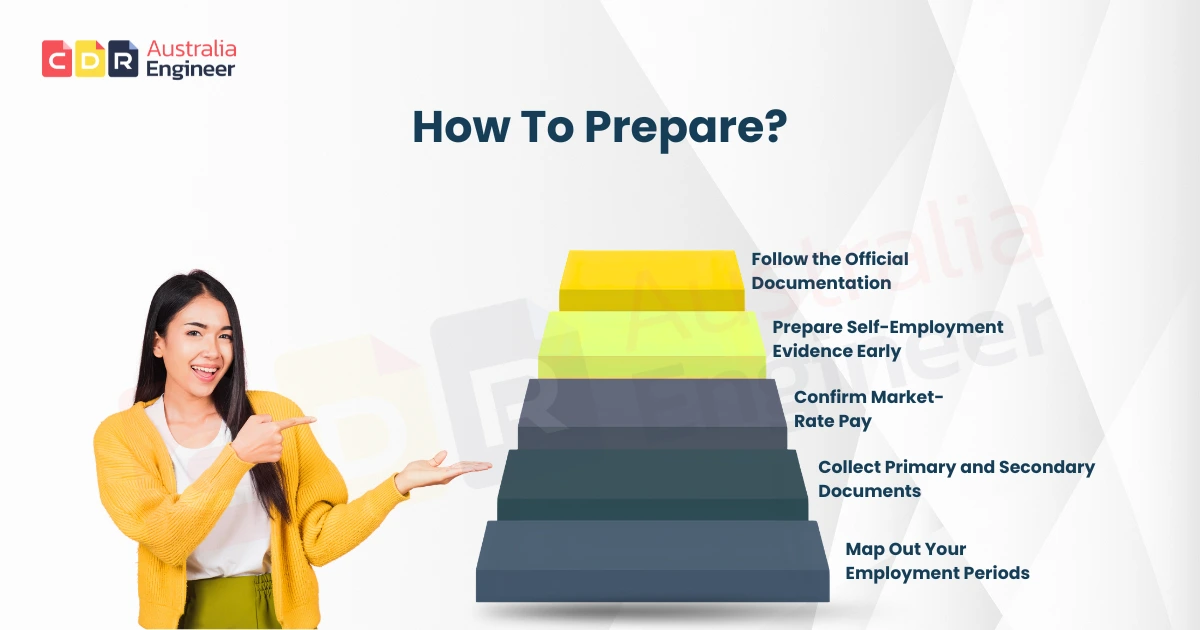
Engineers Australia publishes exactly what evidence is expected for each employment period, so treat this as your primary source rather than blog summaries or second-hand advice. Requirements can shift over time, and only the official documentation reflects what’s currently being assessed.
If you were self-employed for any period, start gathering business registration records, payroll tax receipts, and personal tax returns well in advance, since these documents often take longer to obtain than a simple employer reference letter. Leaving this until the last minute is one of the most common causes of delay for self-employed applicants.
Cross-check your salary evidence against typical market rates for engineering professionals in that specific role and location, since pay that falls noticeably below market rate risks the entire period going unendorsed. This is worth doing early, before you’ve built your whole submission around a role that may not qualify.
Don’t rely on a single reference letter—pair it with payslips, tax records, and superannuation statements so each employment period is corroborated from multiple angles. Engineers Australia is checking for consistency across documents, not just the existence of one strong letter, so the more your evidence lines up with itself, the stronger your case.
Before gathering any documents, list each role you intend to claim with exact start and end dates so you know precisely what needs to be evidenced for every period rather than working it out as you go. Getting this timeline right first makes every later step faster, since you’ll already know which gaps or overlaps need explaining.
The assessment process for the Relevant Skilled Employment Assessment can be confusing, especially for candidates managing multiple employers, self-employment records, or gaps in their work history.
We help internationally qualified engineers at CDR Australia Engineer with:
We don’t replace your original employment records—this is just to help you approach this process with a clear and organized plan.
Passing the Relevant Skilled Employment Assessment is as much about organizing the right evidence as it is about having genuinely relevant experience. The process will be smoother, with fewer setbacks, for applicants who understand exactly what primary and secondary documentation is expected, confirm their pay meets market rate, and structure their submission by employment period rather than as a single, undifferentiated work history.
The right information and guidance can make all the difference between endorsed points and a missed opportunity. We realize you’re here to make your migration journey easier, to help you approach each employment period confidently and clearly, and to focus on what matters most—securing the points you’ve genuinely earned.
It reviews and endorses an applicant’s engineering employment history, confirming that work meets Engineers Australia’s standards for skilled, market-rate engineering employment for points-test purposes.
It’s mandatory only for the Engineering Manager occupational category. For all other categories, it’s optional, though skipping it means forgoing the associated points.
No. The Migration Skills Assessment evaluates your qualifications and technical competency. This one separately verifies your employment history and must generally be requested on its own.
Yes, but self-employed applicants need to provide additional evidence, such as payroll tax receipts, business registration, and personal income tax returns for the relevant period.
Unendorsed periods simply won’t contribute points toward your Expression of Interest—they don’t affect your Migration Skills Assessment outcome itself, provided that it was assessed separately.
Start with a free consultation. We assess your profile at no cost and guide you every step of the way.

Scan to Connect With Our Experts ⤴︎